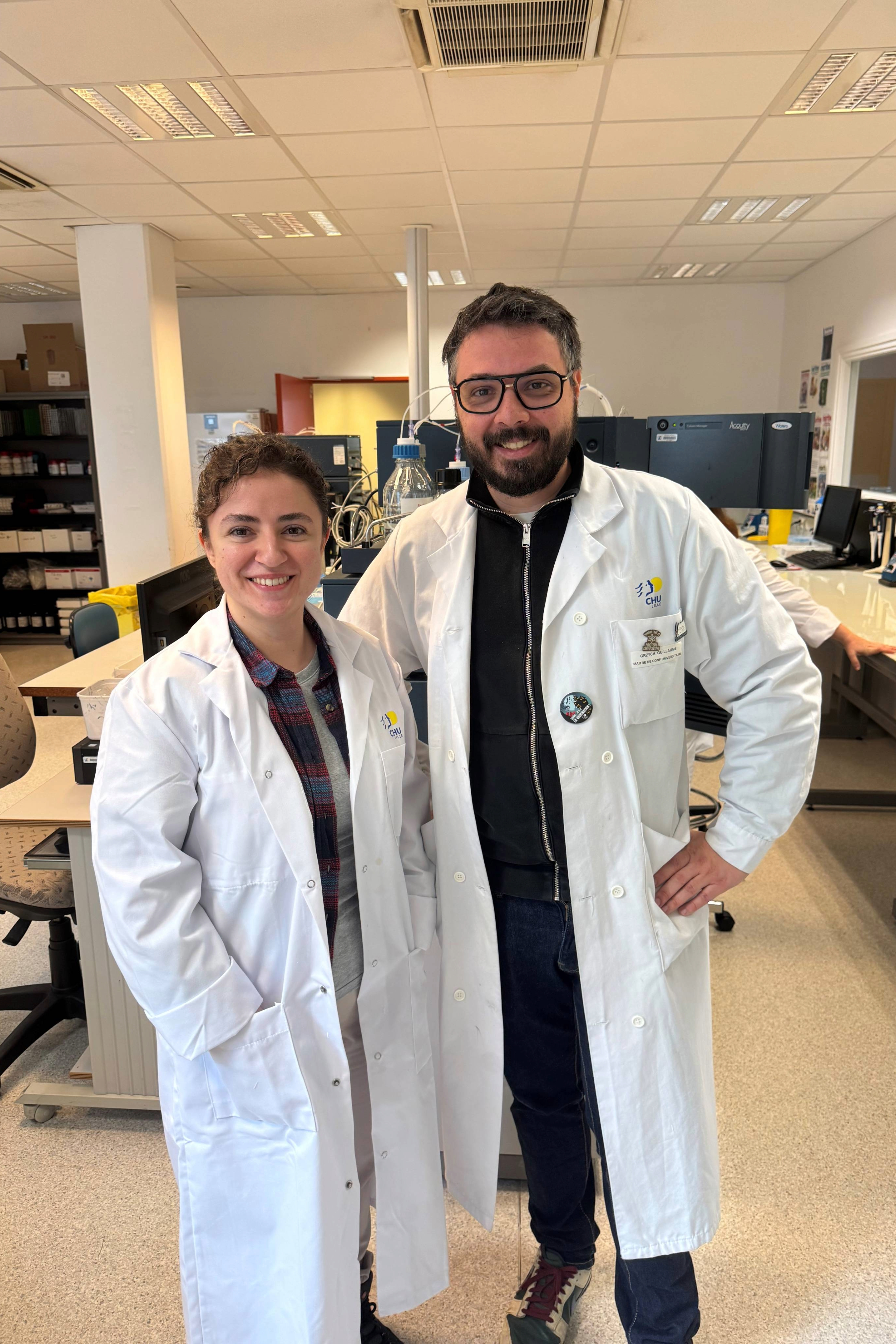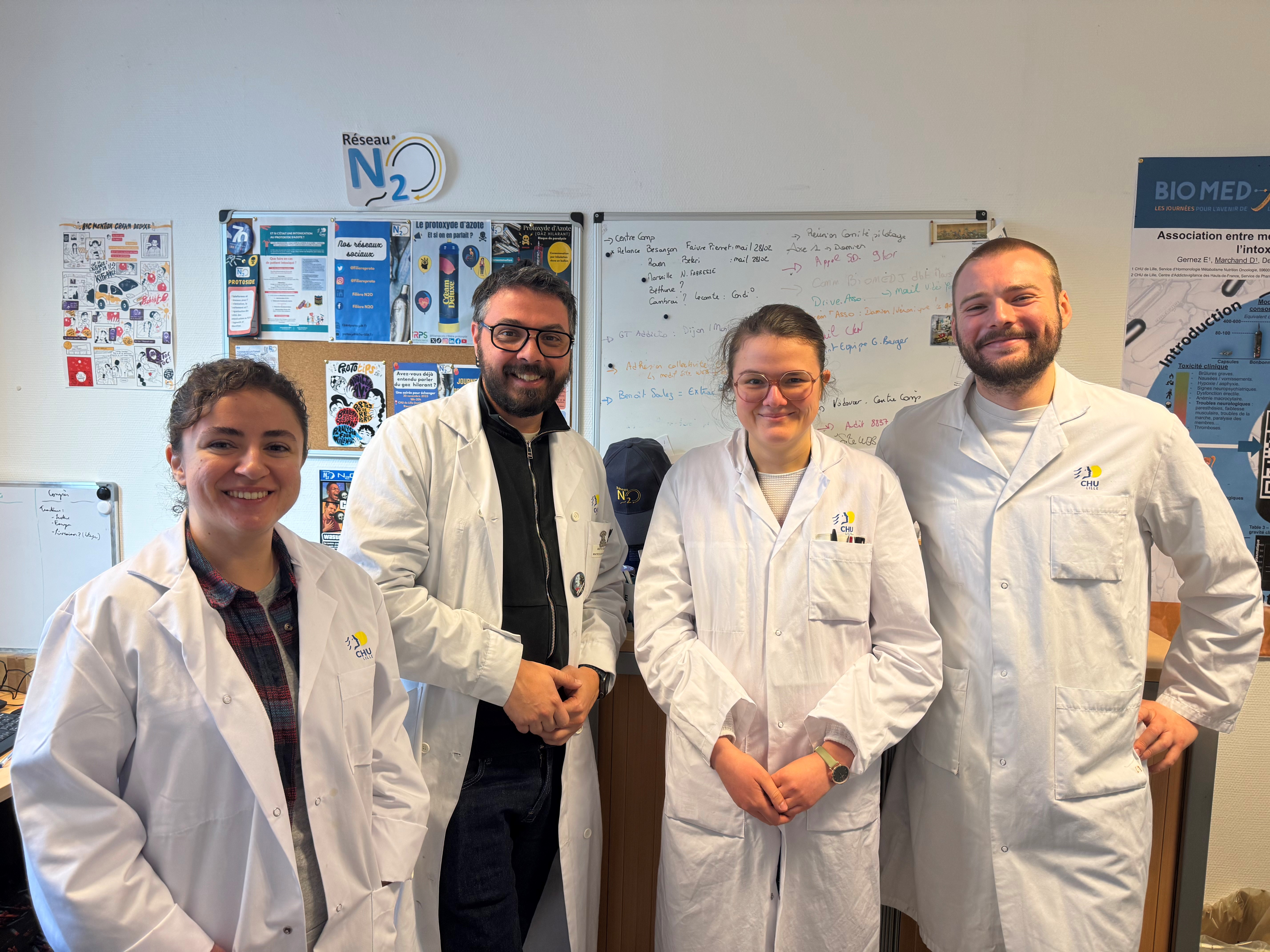
As part of the EFLM LabX exchange program, I completed a three-month placement (December 2025 – March 2026) at the Biological Markers of Nutrition Laboratory of the Lille University Hospital in Lille, France. I am particularly grateful to Dr. Guillaume Grzych for offering me this incredible opportunity. I would also like to thank Prof. Dr. Tomris Özben, President of the International Federation of Clinical Chemistry and Laboratory Medicine, for her academic guidance and institutional support. This experience greatly enhanced my professional development and also my perspective regarding the social responsibility of laboratory medicine. I am currently working as a resident doctor in the Department of Medical Biochemistry at Balıkesir University Health Application and Research Hospital, Turkiye. My primary objective was to observe how a laboratory functions within a different healthcare system; however, over time, this experience turned into a learning process that showed me how scientific work directly contributes to public health.
From the first day, Dr. Guillaume Grzych and his team welcomed me into a warm and supportive environment. They made every effort to make me feel part of their team. Dr. Grzych prepared an academic program tailored to my scientific interests and educational needs and also involved me in an ongoing research project. This was an opportunity that exceeded my expectations, significantly increased my motivation both academically and personally. The atmosphere in the laboratory was friendly and dynamic, and everyone was highly supportive and open to sharing knowledge, which made the learning process effective and enjoyable.
The primary scientific focus of my internship was nitrous oxide and its recreational abuse, and the investigation of the toxicity mechanisms and potential biochemical markers. Due to its increasing recreational use, nitrous oxide has emerged as a significant public health issue, causing severe neurological and metabolic consequences.
Dr. Guillaume Grzych and his team approach this subject not only as a research area, but also as a scientific responsibility. They actively organize public awareness events, engage with the media when necessary, and work to inform all parts of society about nitrous oxide addiction and toxicity. This approach inspired me both scientifically and personally. It showed me that laboratory medicine is not limited to diagnostic procedures; it also encompasses a broader area of responsibility concerning public health.
They have also contributed meaningfully to raising awareness in the scientific community. During my internship, I had the chance to observe the behind the scenes of the NOxForum 2026 Protoside Conference, which was an especially educational experience. Witnessing the preparatory stages of such a platform was profoundly impressive. The conference provides researchers working on nitrous oxide at both biochemical and clinical levels with an opportunity to discuss current developments. It also offers a broadening perspective for young scientists who are just beginning their careers. I was also fortunate to attend the conference and present a poster, both of which were remarkable experiences at this early stage of my career. The conversations I had with clinicians from different backgrounds opened new perspectives that I will carry forward in my practice.
During the internship, I observed laboratory practices that differ from those routinely applied in Turkiye. I also had the chance to work with various technical methods. I observed HPLC and mass spectrometry (MS) techniques. In particular, they utilized an in-house developed method on the LC-MS/MS instrument for measuring methylmalonic acid and homocysteine. Listening to the validation and verification process of this method and learning about the analytical challenges they faced was a valuable experience, deepening my understanding of method development. Furthermore, observing the analysis of vitamins and the clinical validation of the results was highly beneficial for me. The knowledge I gained through cell culture studies and cell culture-based experimental design also strengthened my foundational research skills.
Lille University Hospital is a large institution with an extensive laboratory infrastructure. During this period, I had the opportunity to become familiar with several different laboratory units within the hospital and observe their operations in addition to the nutritional biochemistry laboratory. This experience made me observe how a centralized laboratory structure within a large hospital maximizes operational efficiency and effectiveness.
The life outside the laboratory was also a crucial component of this journey. With its rich culture, daily life and the kindness of its people, Lille enhanced the experience well beyond my expectations.
I know that this internship will significantly contribute to my future professional practice. The technical knowledge, the analytical perspective, the researchers I have met, and the awareness I have gained about the role of laboratory medicine in society will definitely contribute to a more holistic approach in my future practice of clinical biochemistry.
I would like to sincerely thank the EFLMLabX program for making this valuable experience possible, Balıkesir University for its support, and especially Dr. Guillaume Grzych and his entire team for everything they provided throughout this experience. Words cannot express enough gratitude to Dr. Guillaume Grzych for providing the foundation for this unforgettable experience.
As part of the EFLM LabX exchange program, I completed a three-month placement (December 2025 – March 2026) at the Biological Markers of Nutrition Laboratory of the Lille University Hospital in Lille, France. I am particularly grateful to Dr. Guillaume Grzych for offering me this incredible opportunity. I would also like to thank Prof. Dr. Tomris Özben, President of the International Federation of Clinical Chemistry and Laboratory Medicine, for her academic guidance and institutional support. This experience greatly enhanced my professional development and also my perspective regarding the social responsibility of laboratory medicine. I am currently working as a resident doctor in the Department of Medical Biochemistry at Balıkesir University Health Application and Research Hospital, Turkiye.