EFLM LabX report by Lydia Peris Serra, Spain
Participating in the EFLMLabX Exchange Programme gave me the opportunity to spend two months, from January to February 2026, at the Laboratory of Inherited Metabolic Diseases of Ospedale Pediatrico Bambino Gesù in Rome. The main objective of my stay was to expand my knowledge of peroxisomal disorders, an area of inherited metabolic diseases in which I was particularly interested in gaining practical experience.
The exchange provided an excellent opportunity to deepen my knowledge of mass spectrometry applied to the diagnosis of inherited metabolic diseases. During my stay, I gained experience with both liquid chromatography–tandem mass spectrometry (LC-MS/MS) and gas chromatography–mass spectrometry (GC-MS), becoming familiar not only with the analytical techniques themselves but also with the principles behind method development, optimisation, validation and interpretation of biochemical results.
A particular highlight was learning the multimethod LC-MS/MS approach used for the diagnosis of peroxisomal disorders. This method allows the simultaneous analysis of very long-chain fatty acids, bile acid intermediates, phytanic acid and pristanic acid, providing a comprehensive biochemical evaluation of these disorders. I also had the opportunity to learn the GC-MS method for plasmalogen analysis, another key investigation in the biochemical diagnosis of peroxisomal diseases.
Although my initial focus was on peroxisomal disorders, the experience naturally extended to many other areas of inherited metabolic diseases. I gained insight into the biochemical diagnosis of amino acid disorders, organic acidurias, fatty acid oxidation defects, lysosomal diseases, oligosaccharidoses and many other inborn errors of metabolism, while also observing the optimisation and implementation of new mass spectrometry-based methods for clinical diagnostics. This broader exposure gave me a better understanding of the organisation and workflow of a specialised metabolic laboratory and of the continuous innovation required to improve diagnostic capabilities in rare diseases.
Beyond the technical aspects, one of the most valuable parts of the exchange was working in a laboratory where advanced analytical technologies are fully integrated into routine clinical diagnostics. Seeing how different mass spectrometry platforms complement each other and how biochemical investigations are carefully selected and interpreted reinforced my appreciation of the essential role of laboratory medicine in the diagnosis of inherited metabolic diseases.
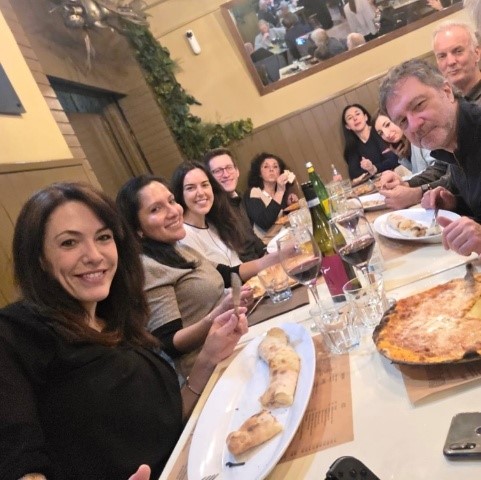
Equally important was the human aspect of the experience. From my first day, I was warmly welcomed and made to feel part of the team. Everyone was always willing to explain procedures, discuss analytical strategies and share their experience, creating an excellent environment for learning.
I would like to express my sincere gratitude to my tutor, Dr Cristiano Rizzo, for his guidance, patience and continuous support throughout my stay. I am also grateful to Prof. Carlo Dionisi Vici, Head of the Metabolic Unit, for giving me the opportunity to train in such an outstanding reference centre. My sincere thanks also go to Dr Sara Boenzi, Dr Michela Semeraro, and to Giulio Catenesi and Elisa Sacchetti, whose willingness to explain laboratory procedures, discuss analytical approaches and generously share their experience created an exceptional learning environment throughout my stay.
Living in Rome for two months was also an important part of the experience. Beyond the laboratory, it gave me the opportunity to discover a new city, experience a different healthcare and research environment, and appreciate the value of international collaboration in laboratory medicine.
Finally, I would like to thank the European Federation of Clinical Chemistry and Laboratory Medicine (EFLM) for supporting this initiative through the EFLMLabX Exchange Programme. Programmes like this create valuable opportunities for young laboratory medicine professionals to learn from leading European centres, exchange knowledge and establish collaborations that continue well beyond the duration of the exchange.
I returned to my home institution with new technical skills, a deeper understanding of mass spectrometry in inherited metabolic diseases, and many ideas that I hope to apply in my own laboratory. I would strongly encourage other young laboratory medicine professionals to participate in the EFLMLabX Exchange Programme and take advantage of this unique opportunity for professional development.
Participating in the EFLMLabX Exchange Programme gave me the opportunity to spend two months, from January to February 2026, at the Laboratory of Inherited Metabolic Diseases of Ospedale Pediatrico Bambino Gesù in Rome. The main objective of my stay was to expand my knowledge of peroxisomal disorders, an area of inherited metabolic diseases in which I was particularly interested in gaining practical experience.
The exchange provided an excellent opportunity to deepen my knowledge of mass spectrometry applied to the diagnosis of inherited metabolic diseases. During my stay, I gained experience with both liquid chromatography–tandem mass spectrometry (LC-MS/MS) and gas chromatography–mass spectrometry (GC-MS), becoming familiar not only with the analytical techniques themselves but also with the principles behind method development, optimisation, validation and interpretation of biochemical results.